Français
 English
 Deutsch
 עברית
עברית Português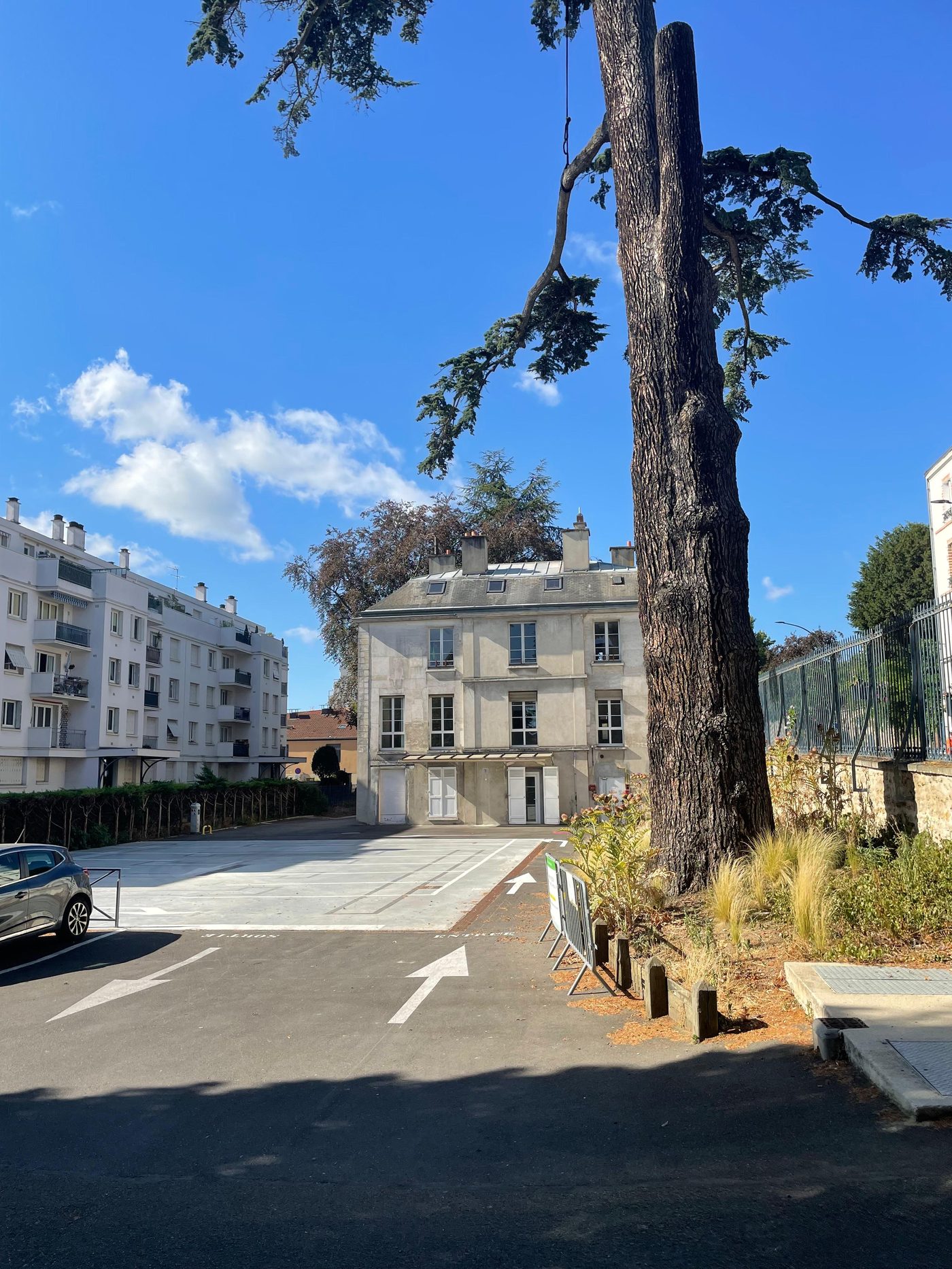
The felling was stopped in 2021 and there is no petition running today. But the summer of 2026 changed the nature of the problem: France has just lived through its hottest June on record, and a tree whose roots are covered in concrete has no way of absorbing a heatwave like that. This chapter explains why, and what would help.
June 2026: the hottest month of June ever measured in France
These are not impressions. According to the Météo-France climate report, June 2026 became the hottest June ever recorded in the country, with a national mean temperature of 22.7 °C — 3.8 °C above normal, ahead of June 2003 (+3.5 °C) and June 2025 (+3.3 °C). The heat settled in from 17 to 30 June, peaking between the 22nd and the 26th.
On 24 and 25 June 2026, the twenty-four-hour mean temperatures were the highest ever measured in France in any month: they reached 30 °C for the first time, past the 29.4 °C of 5 August 2003 and 25 July 2019. In Paris, on 19 June, the thermometer hit 36 °C — a level never observed in June.
And here is the figure that matters most to a tree: across the month, the rainfall deficit came close to 50 %, and drought spread across the whole of mainland France and Corsica. A record demand for water, and half the usual supply, at exactly the same moment.
Source: Météo-France — climate report for June 2026.
What a heatwave asks of a cedar
A mature cedar of Lebanon is not a delicate plant. It is a mountain species, used to dry summers, able to live more than five hundred years. Its strategy against heat is simple and expensive: it transpires. Water drawn up by the roots travels to the needles and evaporates, cooling the tree exactly as sweat cools a body. On a hot day a large specimen can return several hundred litres of water to the air.
That cooling system works on one condition — that the soil's water store is replenished. A cedar in open ground draws on a wide, deep volume, recharged by every shower falling anywhere across its rooting area, which extends well beyond the spread of the canopy. Seal that surface and rainwater runs to the gutters instead of soaking in. The tree keeps its demand and loses its supply.
This is where a heatwave becomes a revealer rather than a cause. A well-supplied tree gets through a June at +3.8 °C by slowing its growth. A tree standing on closed ground gets through the same June by spending its internal reserves, then sacrificing shoots, then whole branches. Concrete does not kill the tree in summer: it removes, before summer, everything that would have let the tree survive it.
“A tree of two hundred years cannot be replaced. You can plant another: it will take two centuries to get that one back.”
Association pour le Cèdre — ARCBMWhat happened in 2021, and what has changed since
Early in 2021, a building project was considered for the plot where the tree stands. The argument put forward was safety: the cedar was said to be diseased, and therefore dangerous. A counter-assessment and a citizens' campaign came together quickly. Hundreds of children drew the tree to ask for its protection, a petition was launched on change.org against the abusive felling of remarkable trees, the ARCBM association was formed, and the local authority listened: the Imperial Cedar was preserved.
Five years on, the threat has changed shape. Nobody is proposing to fell the cedar any more — and nobody needs to. Sealed ground and summers like 2026 achieve the same outcome, ten to twenty years later, without any decision having to be taken by anyone. It is a threat that calls no public meeting and files no planning application, and that is precisely what makes it hard to fight.
The rest of this page explains what is happening beneath the surface, then gives the open letter addressed to the Mayor of Meudon.
A tree does not die from the trunk. It dies from the ground.
The Imperial Cedar has stood for more than two centuries. What threatens it today is neither a storm nor a disease, but a few centimetres of impermeable surface laid over its roots.
Roots breathe, and they spread far
Contrary to a widespread image, the roots of a large tree do not plunge deep like a mirror of its crown. They form a wide, shallow plate: the fine absorbing roots, those that actually take up water and minerals, are concentrated in the first thirty to sixty centimetres of soil, and commonly extend well beyond the outline of the branches.
These roots are living tissue. They consume oxygen and release carbon dioxide, exactly as leaves do. That exchange happens through the pores of the soil. A soil that can no longer breathe is a soil in which roots suffocate.
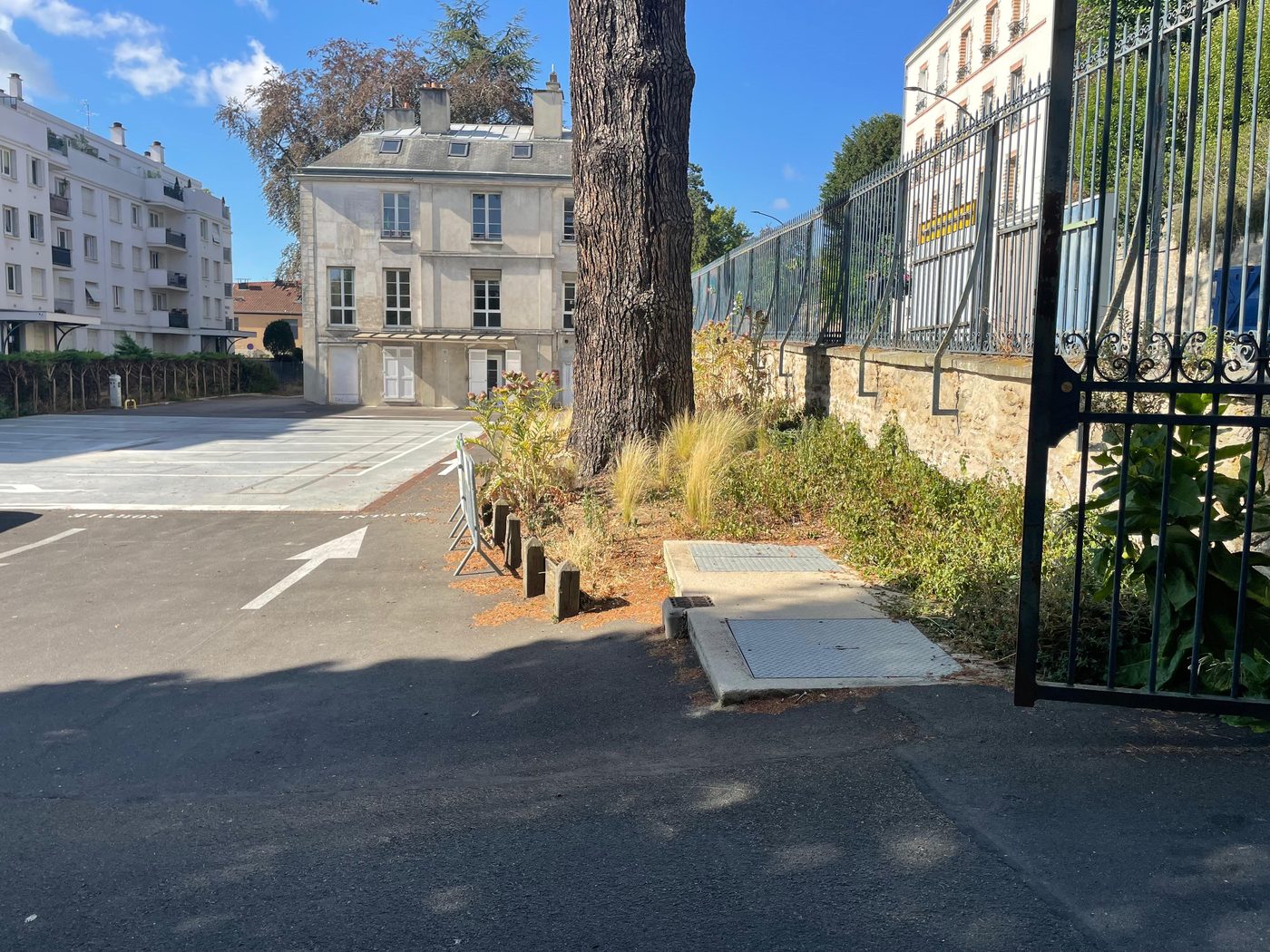
What an impermeable surface actually does
Sealing the ground around a tree acts on three fronts at once, and none of them is visible from the street.
Rainwater no longer reaches the roots. It runs off towards the drains instead of soaking in. A mature cedar transpires hundreds of litres a day in summer; if the water it draws on is diverted, it lives on a reserve that no longer refills.
Gas exchange stops. Deprived of oxygen, the fine roots die back. The tree loses precisely the organs that feed it, while keeping the whole mass it has to sustain.
The soil life collapses. A cedar lives in symbiosis with soil fungi, the mycorrhizae, which extend its absorbing surface many times over. These fungi need air, moisture and organic matter. Under an impermeable surface they disappear, and with them a large part of the tree’s ability to feed itself.
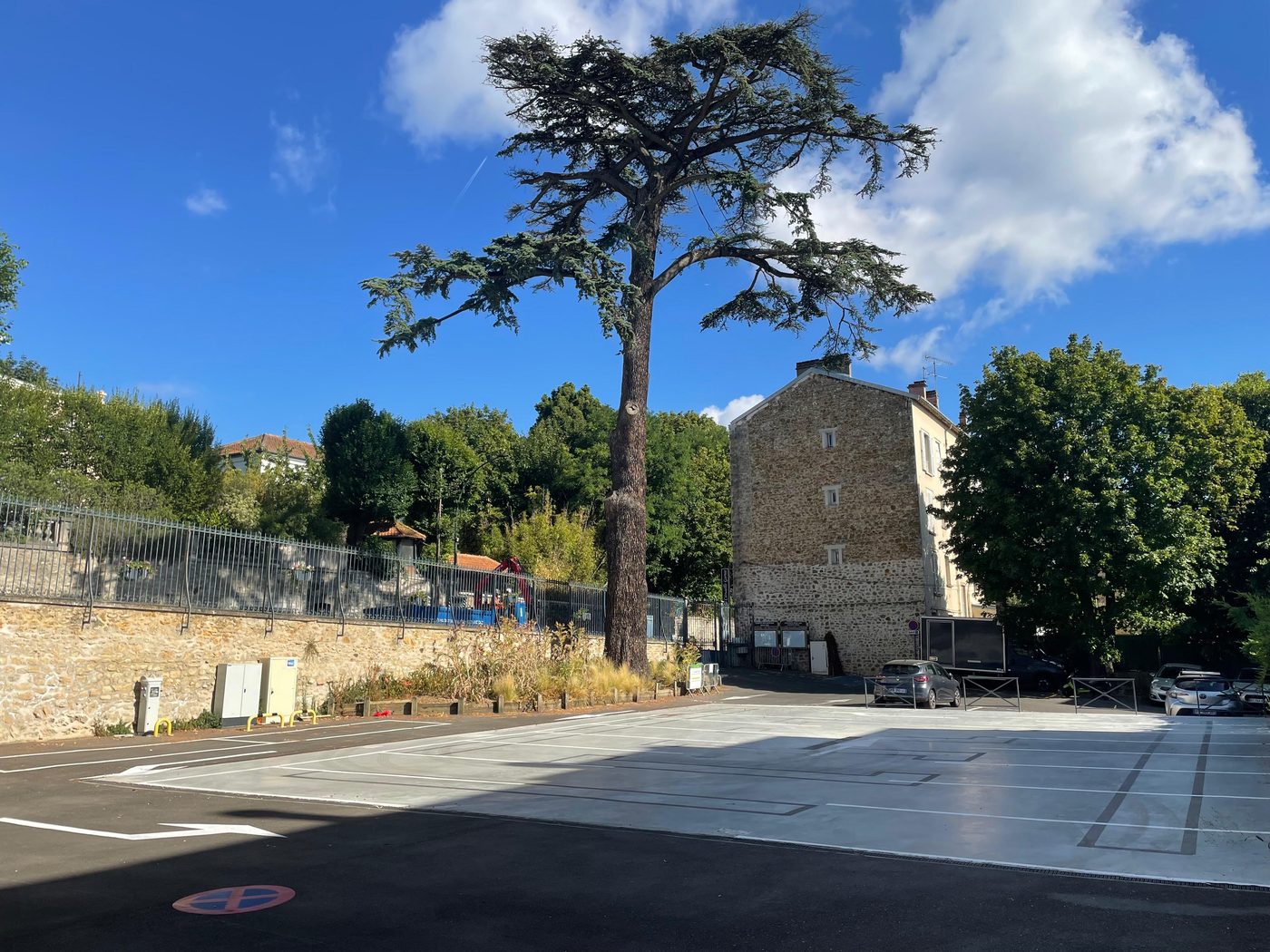
“The ground has been paved, so the tree does not get enough natural rain water.”
Observation recorded on the Imperial CedarThe trap: a decline that arrives years later
This is the point that matters most, and the one most often missed. A mature tree carries considerable reserves. It can absorb an attack on its roots for ten or twenty years before the symptoms show in its crown: thinning foliage, dieback at the tips, branches drying out.
A circle then closes. The ground is sealed, the tree slowly declines, and years later its condition is invoked to declare it sick, then dangerous, then to be felled. Cause and verdict are separated by so much time that the link is no longer made. Naming that sequence is the first act of protection.
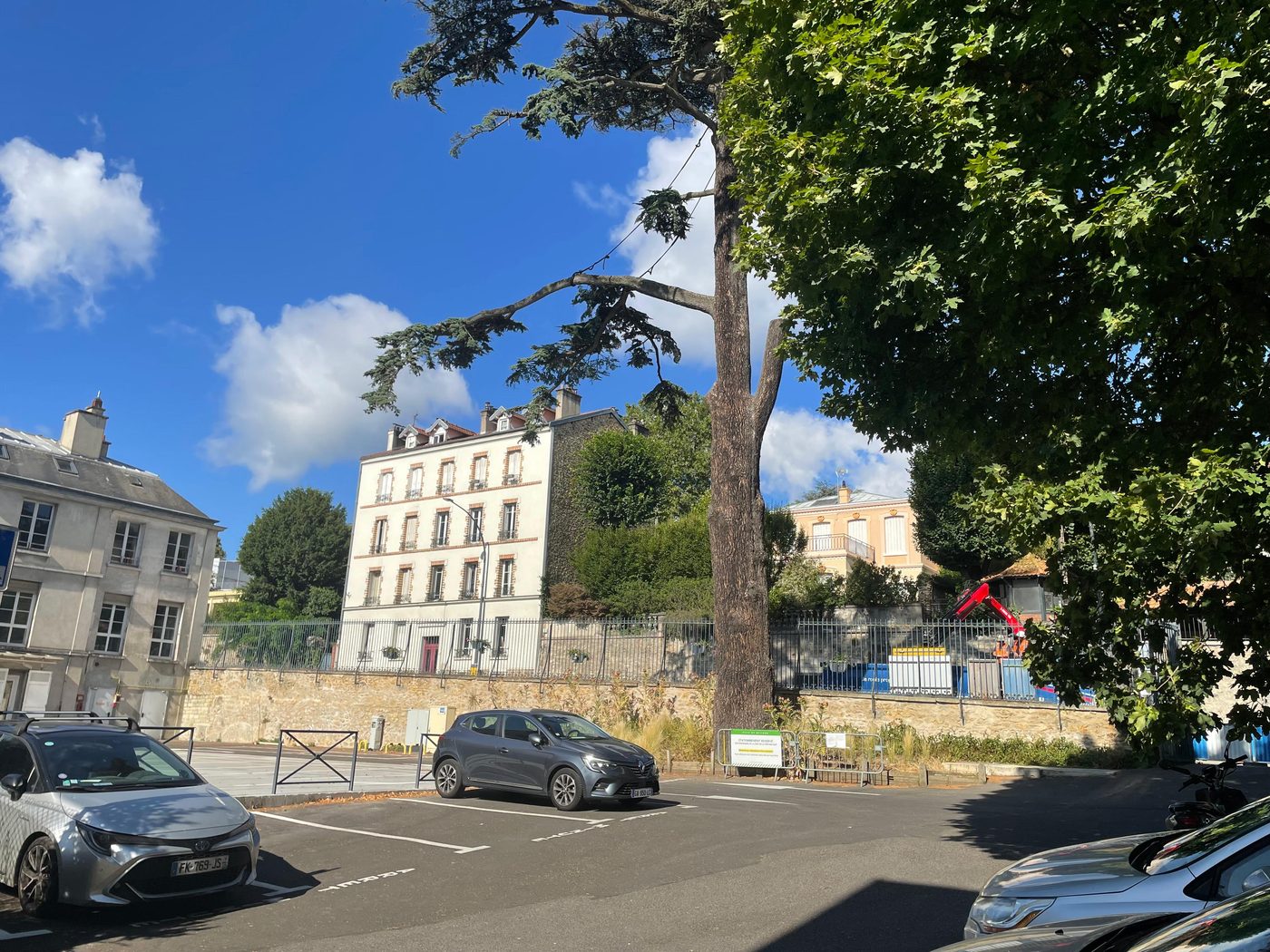
What would actually help
The measures are known, modest and reversible. None of them requires felling anything.
- Open the ground back up. Removing the impermeable surface over the root zone, or replacing it with a draining material — stabilised gravel, permeable paving, open-jointed slabs — restores both infiltration and air.
- Define a root protection zone. A marked area, at least matching the spread of the crown, where nothing is dug, stored, parked or compacted. Soil compaction by vehicles is as damaging as concrete.
- Mulch rather than pave. A layer of wood chips or leaf litter holds moisture, feeds the soil life and protects the surface roots.
- Have an independent arborist assess it. A diagnosis carried out by a tree specialist, distinct from the party planning any works, and made public.
None of this is theoretical. A few kilometres from Meudon, in the same département, another cedar of Lebanon shows what these measures look like once applied.
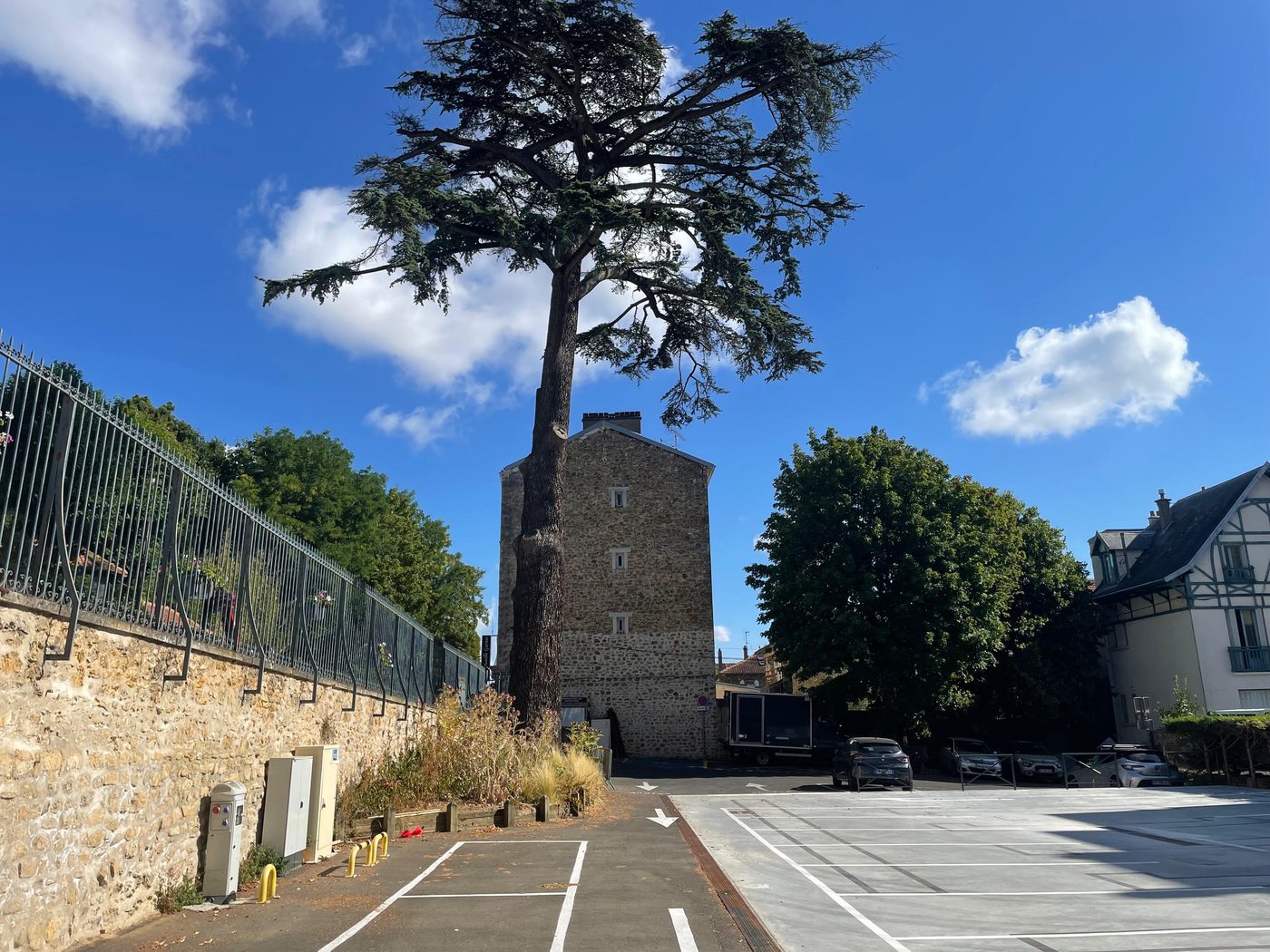 Meudon · the Imperial Cedar
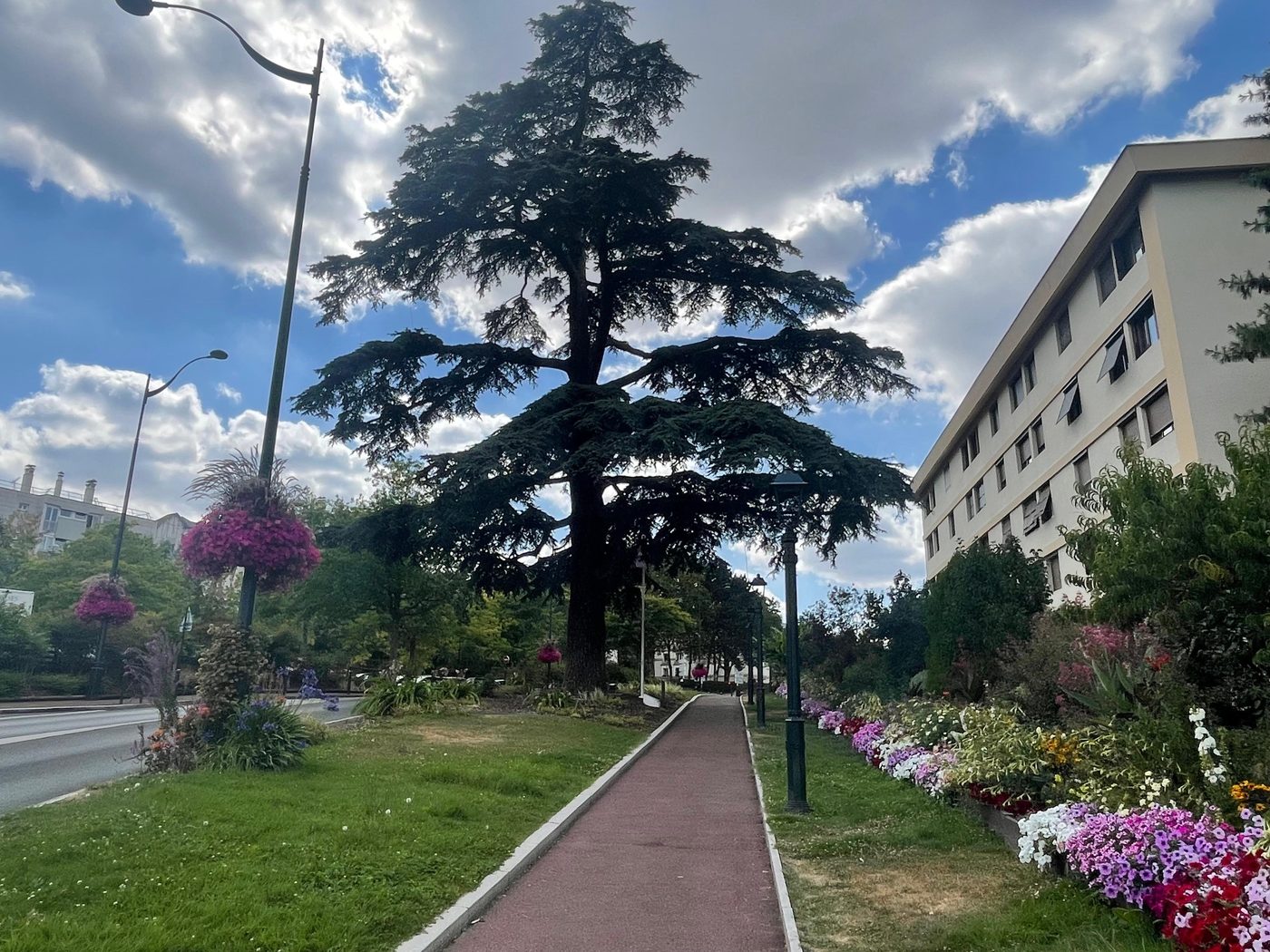
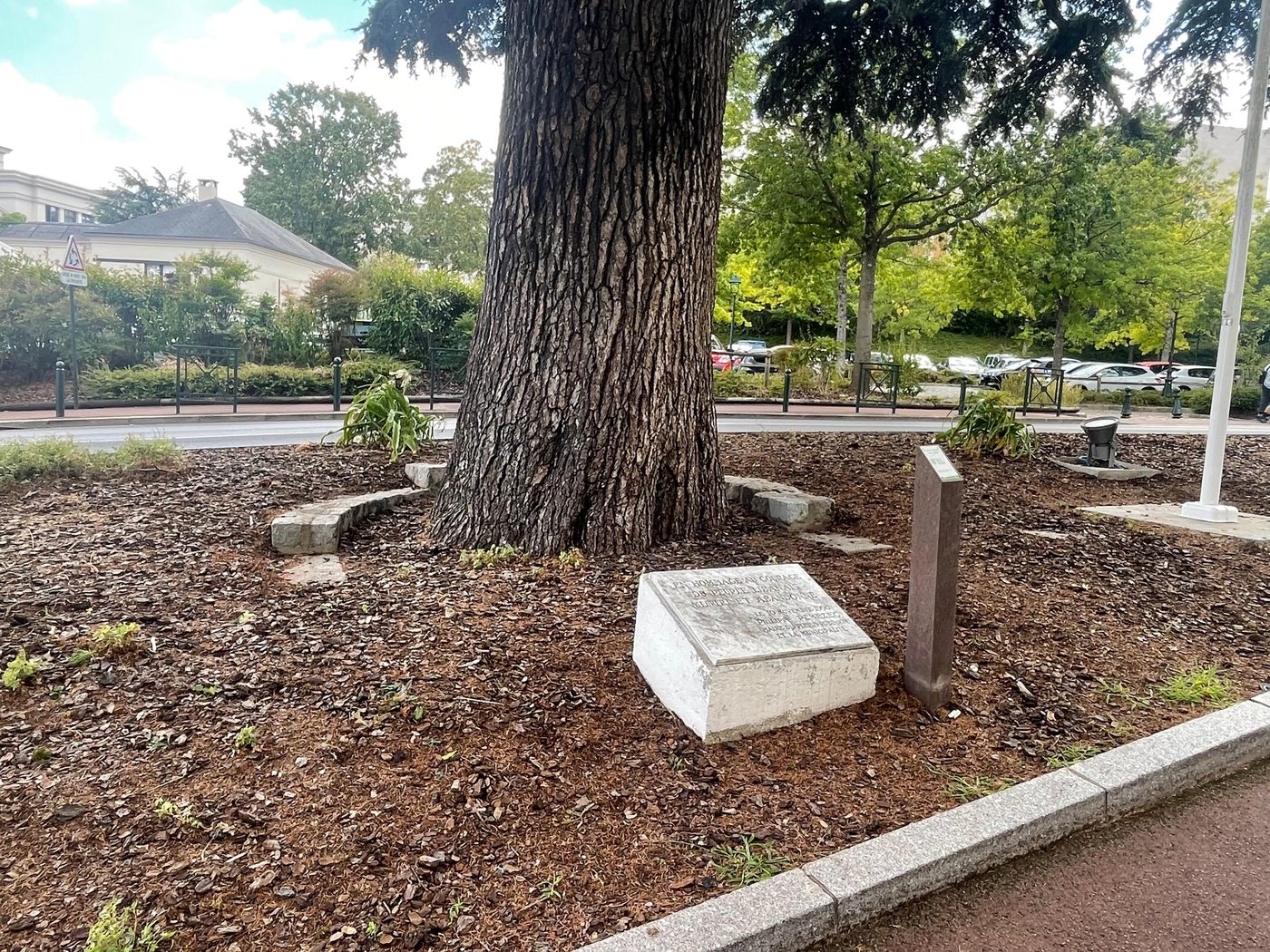 Le Plessis-Robinson · same species
The two settings are comparable: both trees stand in town, beside a road, surrounded by buildings. What separates them is what covers their roots. The result can be read in the crowns — dense and tiered right down to the low branches at Le Plessis-Robinson, thinning at Meudon.
A plaque, and what lies behind it
Protecting a tree is not only a matter of soil. It is also a matter of status. A tree that carries a name, a plaque and a recognised history is far harder to fell than an anonymous tree on a plot of land.
Since 2000 the French association A.R.B.R.E.S. has awarded a “Arbre Remarquable de France” label, held by around a thousand trees. It comes with a plaque and a public commitment by the owner to look after the tree. The label is honorary rather than legal: it creates no obligation. Its strength lies elsewhere — it makes the tree visible, documented, and attached to a community that watches over it. The Imperial Cedar, planted under the Empire and linked to two centuries of documented history, has every characteristic such a label recognises.
A stronger step exists. Under the law of 2 May 1930, now part of the environment code, the State can classify a tree as a natural monument. That classification is a genuine legal protection, and a number of trees in France hold it. It is demanding to obtain — which is precisely why documenting this cedar’s history, gathering its photographs and its testimonies, is not a sentimental exercise. It builds the case file.
A local authority can also protect a tree through its town planning document, by identifying it as a landscape feature to be preserved. That path is often the quickest, and it rests on a municipal decision — therefore on public attention.
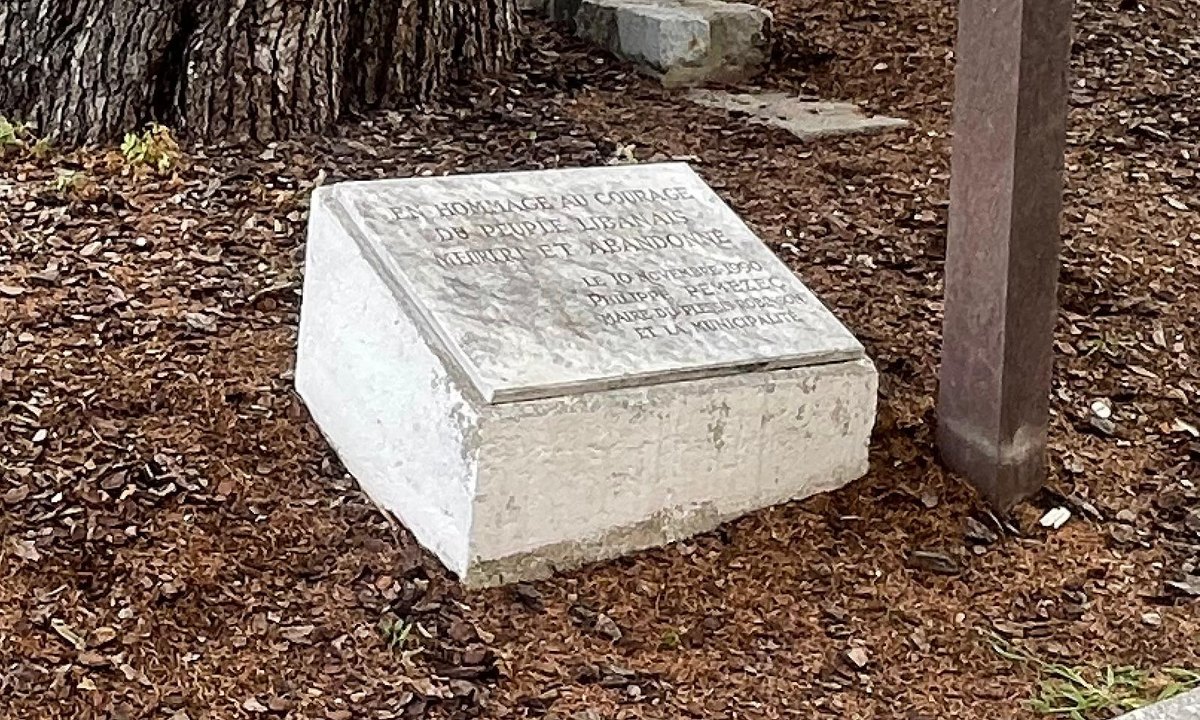
The precedent is worth weighing. Le Plessis-Robinson did not wait for a label or a State classification: the council laid a plaque, marked out a generous root area and mulched it. Nothing in that requires a procedure — only a decision.

Dear Mayor of Meudon
Dear Mayor of Meudon,
Thank you again for having saved the Cedre Imperial from a real estate project back in 2021. That was wonderful!
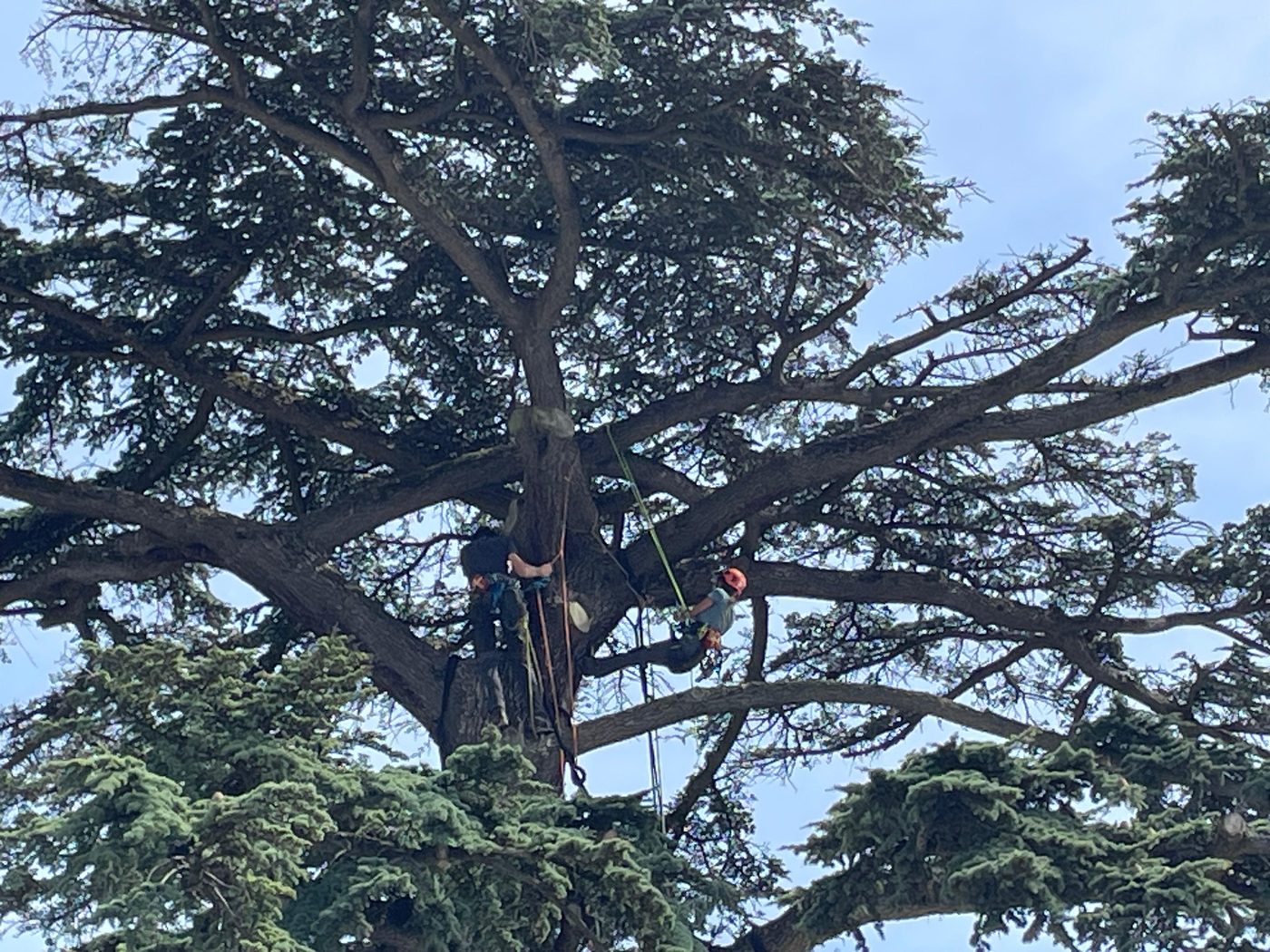
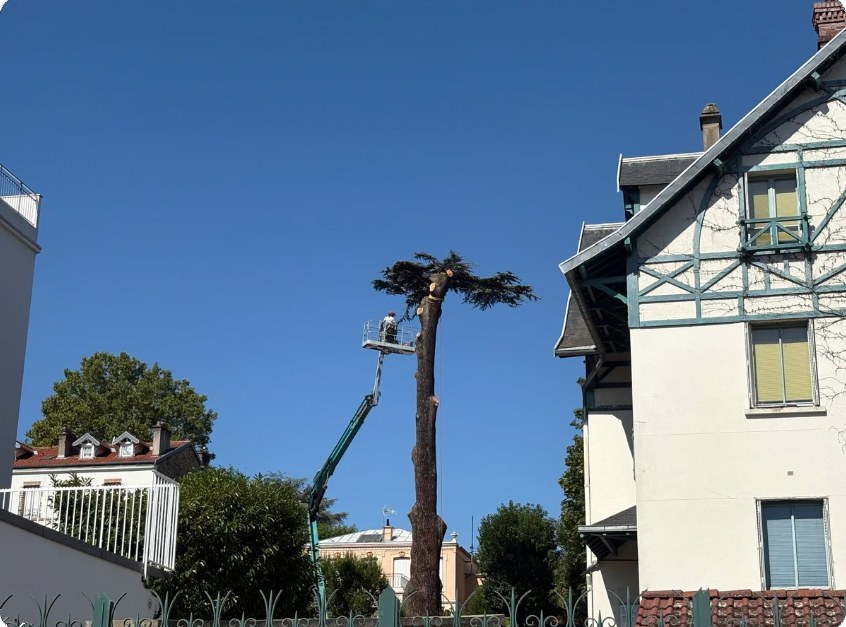
On 24 July 2026 we ran into them: a team of three tree specialists who had come to examine the condition of the tree. One explained that the Cedre Imperial is suffering from the massive concrete slab around it. During heatwaves the concrete becomes really hot, and this damages the roots of the tree.
Removing parts of the concrete, and giving the root system of the beloved cedar the possibility to breathe and to receive water from the rain, would greatly help the tree to recover.
Please look at all the other cedars around Meudon. Those that have enough natural soil around them are resisting the heatwave very well.
It would be so nice to preserve the Cedre Imperial for future generations. Many people love it, and it is a symbol of resistance.
Thank you, Dear Mr Mayor.
This open letter is addressed to Denis Larghero, Mayor of Meudon, who set aside the building project in 2021 — the episode is told in chapter 6.
Visiting the Imperial Cedar
The tree stands at 11 rue de la République, 92190 Meudon, 6.6 km from the Eiffel Tower. It is visible from the street, freely and at no cost. Sunrise and nightfall give the finest light, with the silhouette of Paris behind it.
From Paris there are two simple routes: the RER C towards Versailles Château – Rive Gauche, to Meudon Val Fleury station; or the Transilien N from Paris Montparnasse, to gare de Meudon. From either station the climb up to the rue de la République is a short walk.
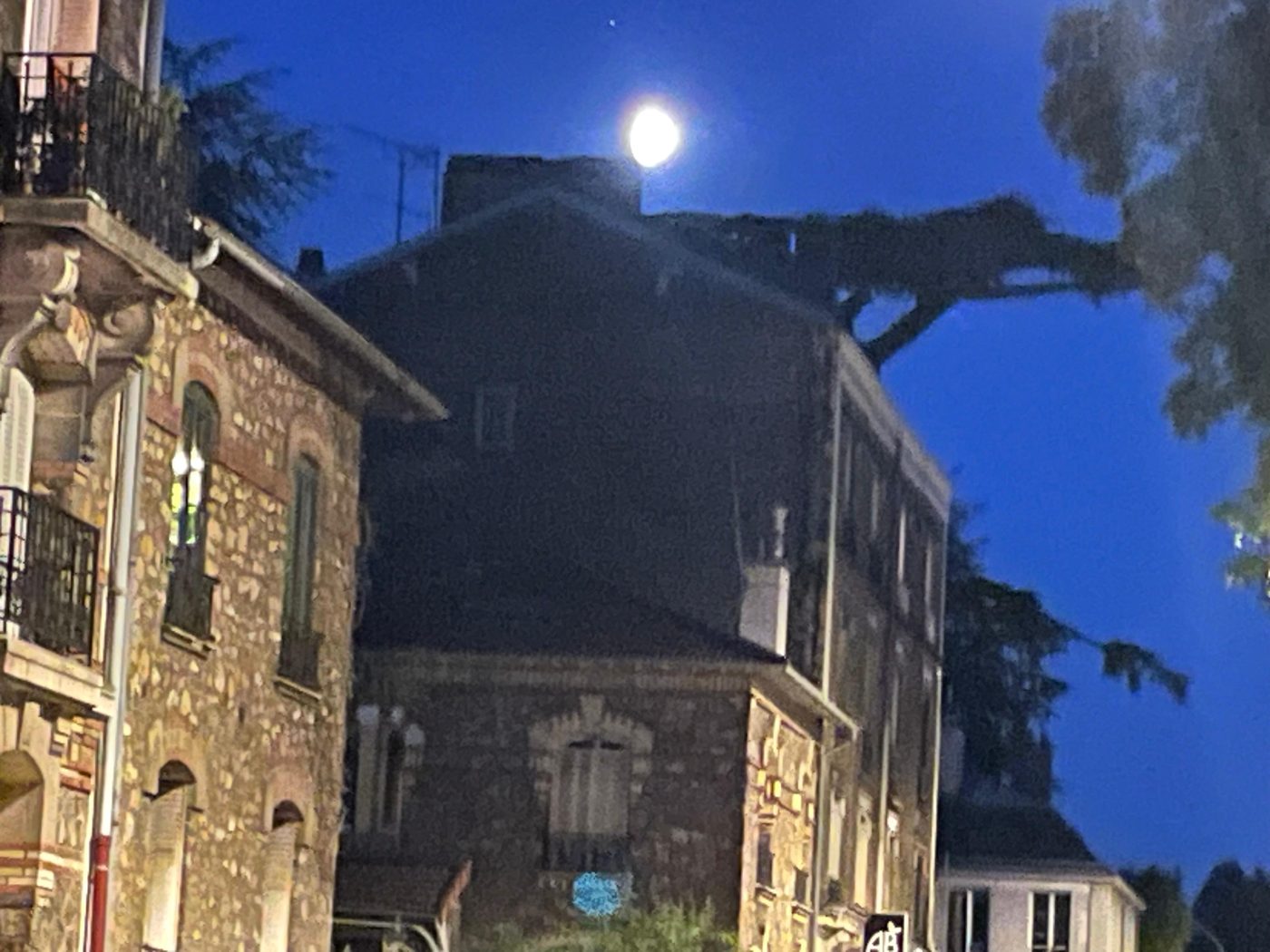
No commemorative plaque
It is what surprises most, once the story is known. Remarkable trees almost always carry a plaque: a few lines at the foot of the trunk giving the species, the age, and what the tree has witnessed.
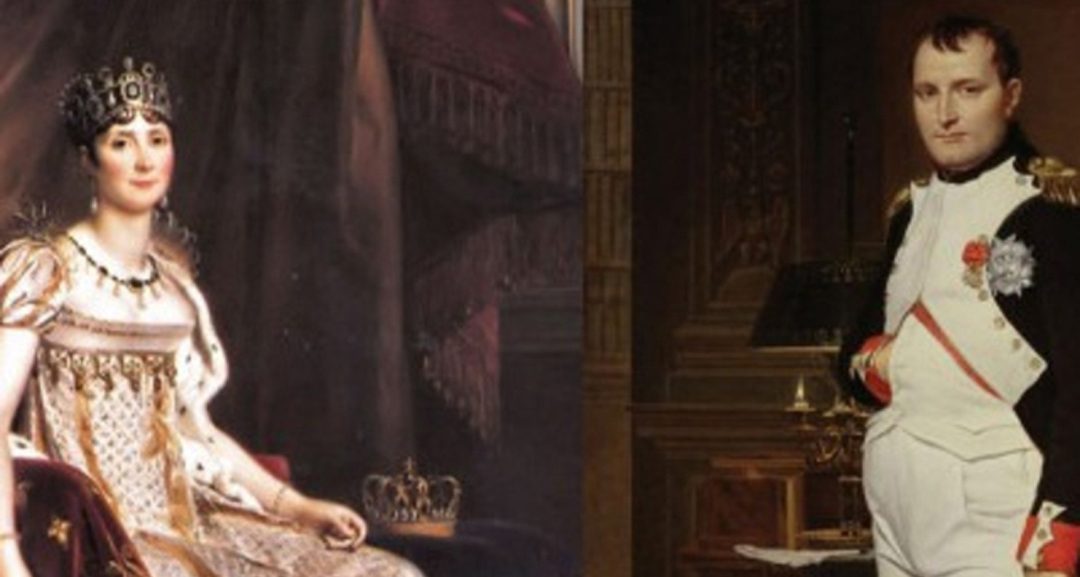
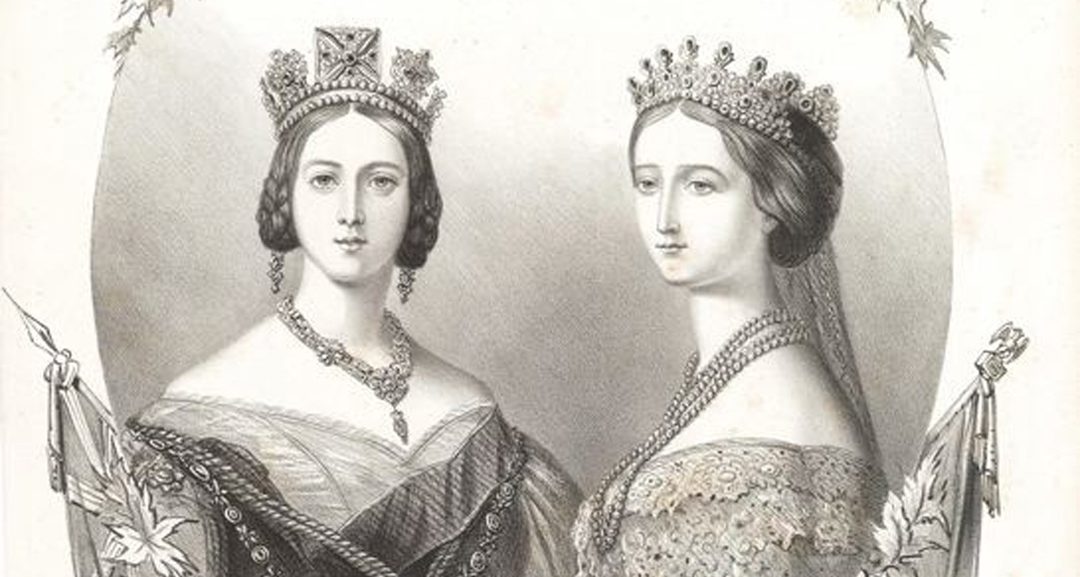
Meudon owns one of the most legendary trees on the planet, and nothing says a word of it to the passer-by. You walk along the rue de la République, you may glance up, and you leave without knowing that Joséphine, the Empress Eugénie, Queen Victoria, Coco Chanel and the Kennedys all stood beneath these branches.
As if the building project had never quite been abandoned, and it were enough to wait for the cedar to die to free the ground it stands on.