Français
 English
 Deutsch
 עברית
עברית Português
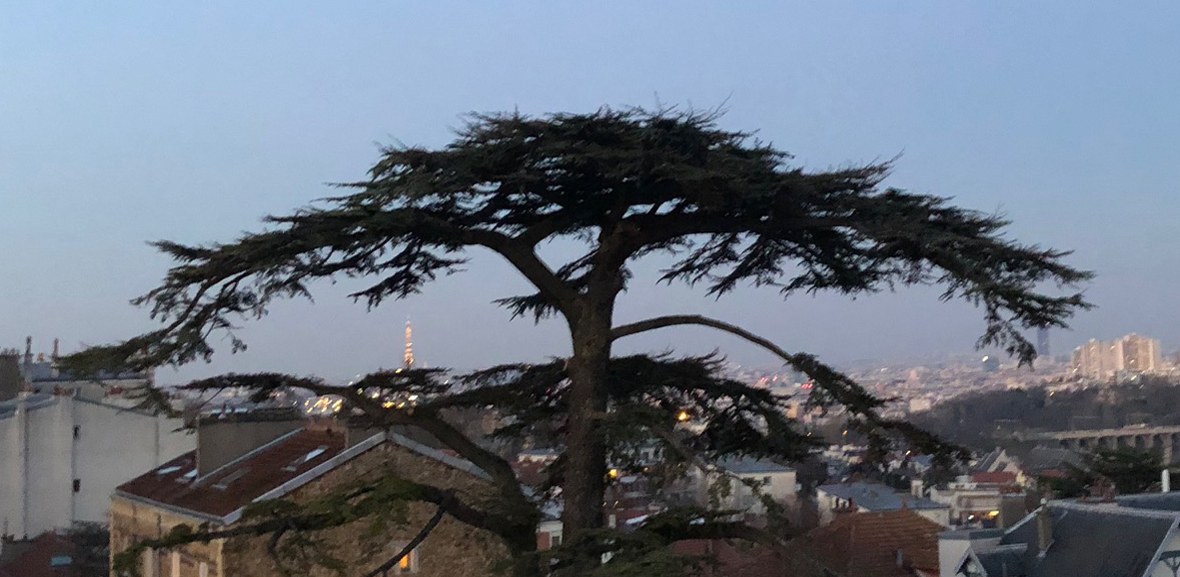
A tree never travels; its stories do. In three generations, the reputation of the cedar on the plateau of Meudon left the Hauts-de-Seine, settled into the English residences of a fallen empress, and reached the private apartments of the imperial court of Russia.
An empress and an old soldier of the Empire
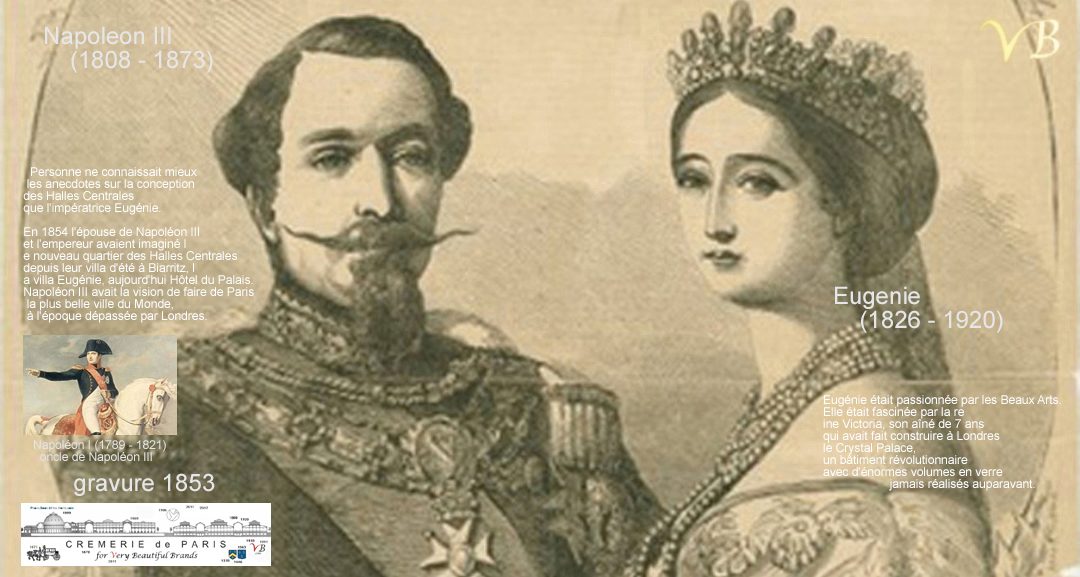
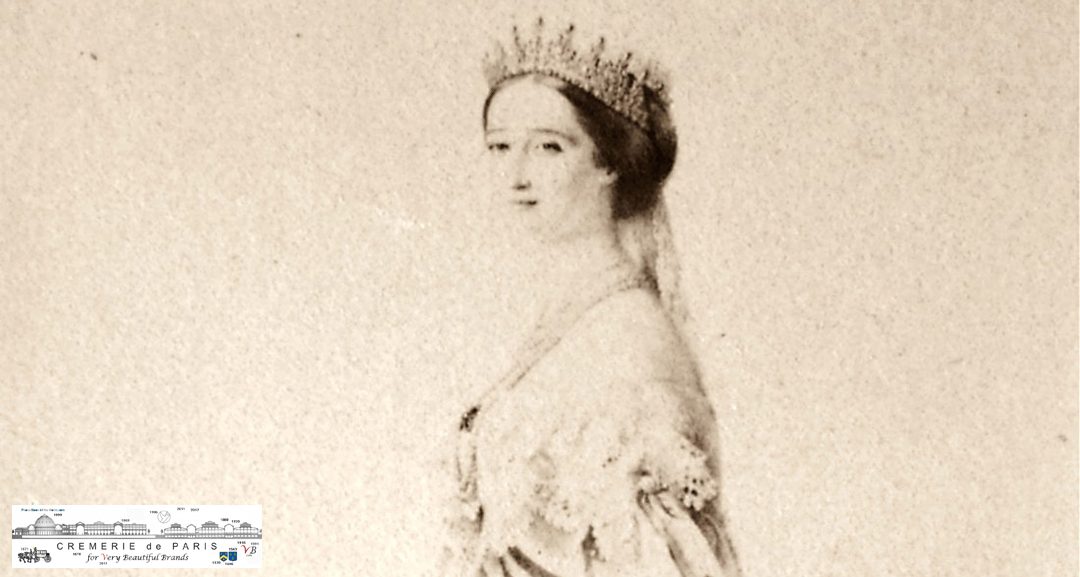
It begins with a regime and a marriage. Elected president of the Second Republic in 1848, Louis-Napoléon Bonaparte took the title of Napoleon III in 1852 and married Eugénie de Montijo on 29 January 1853. Born outside France, the new empress set about learning at first hand the history of a dynasty whose memory she had not inherited.
That first hand lived in Meudon. General Jean-François Jacqueminot (1787-1865) had served alongside Napoleon I and occupied a property directly facing the cedar. Eugénie took to visiting him to hear the First Empire described from the inside, and it was during those conversations that she noticed the tree next door.
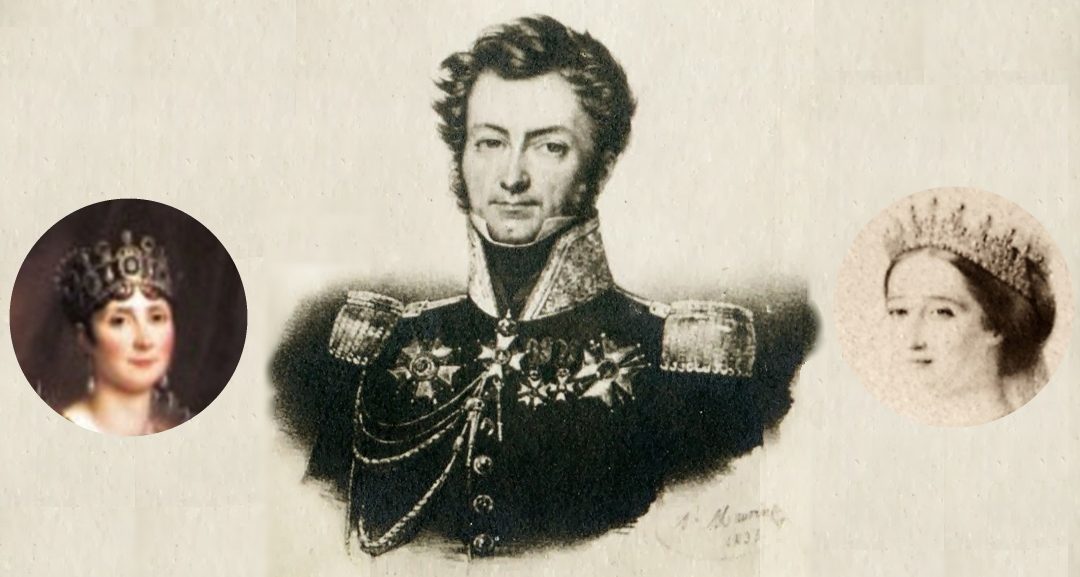
The general's daughter-in-law, Sophie-Angélique Jacqueminot (1792-1864), told her more: the cedar was said to pass on good energy to anyone who came near it, along with a share of its own longevity. Eugénie grew attached to it, and from Saint-Cloud as from the Tuileries she would make the journey out to meditate at its foot.
1855: two sovereigns at the foot of the tree
In 1855 the state visit of Queen Victoria (1819-1901) sealed the friendship of the two crowns. Between the official ceremonies, Eugénie showed her guest the tree she had spoken of so often. The two women put their arms around the trunk in turn to absorb its energy — a disarmingly simple gesture from two of Europe's most protocol-bound figures.
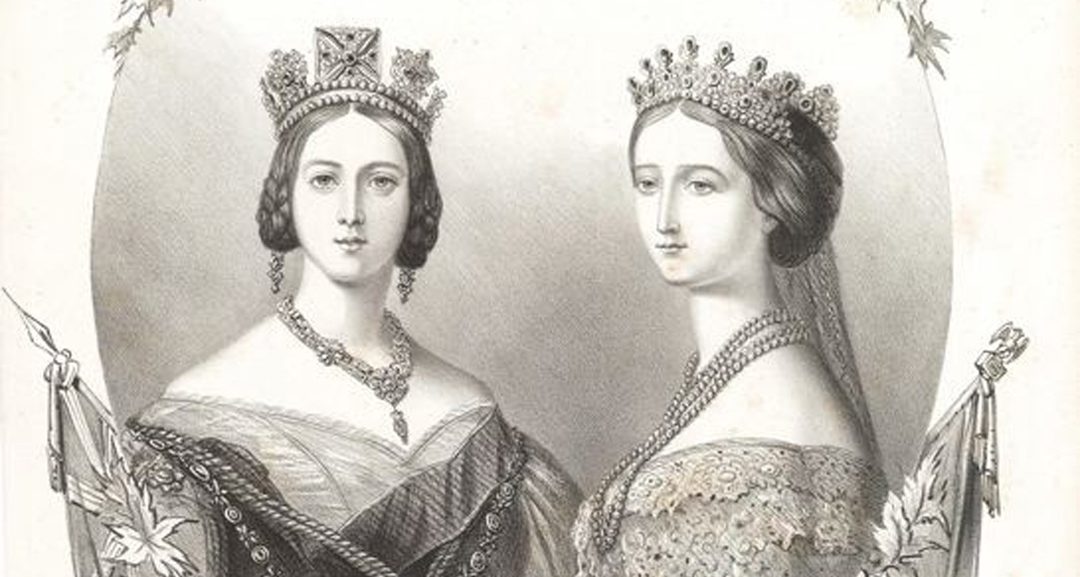
The friendship went beyond confidences. Victoria had a tangible influence on Eugénie, including on the shape of imperial Paris: Victor Baltard's iron-and-glass market halls owed much to London's Crystal Palace — two courts trading architectural ideas and private beliefs in the same breath.
General Jacqueminot died in 1865. His name survived him as a rose, the "Général Jacqueminot", and as an avenue in Meudon. The cedar lost the neighbour who had brought it into history.
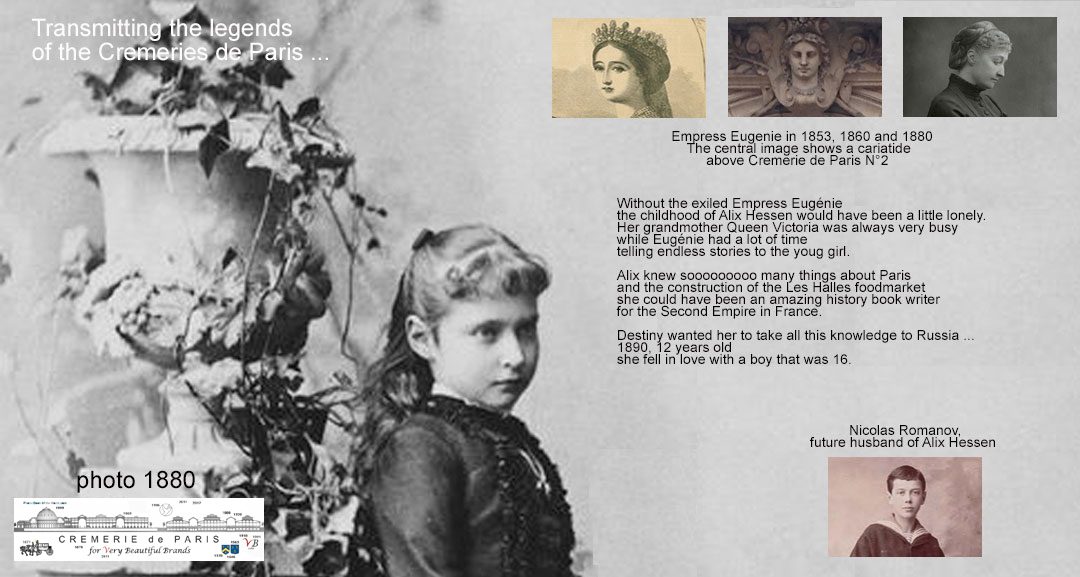
Alix of Hesse
1872 – 1918 · Tsarina of Russia
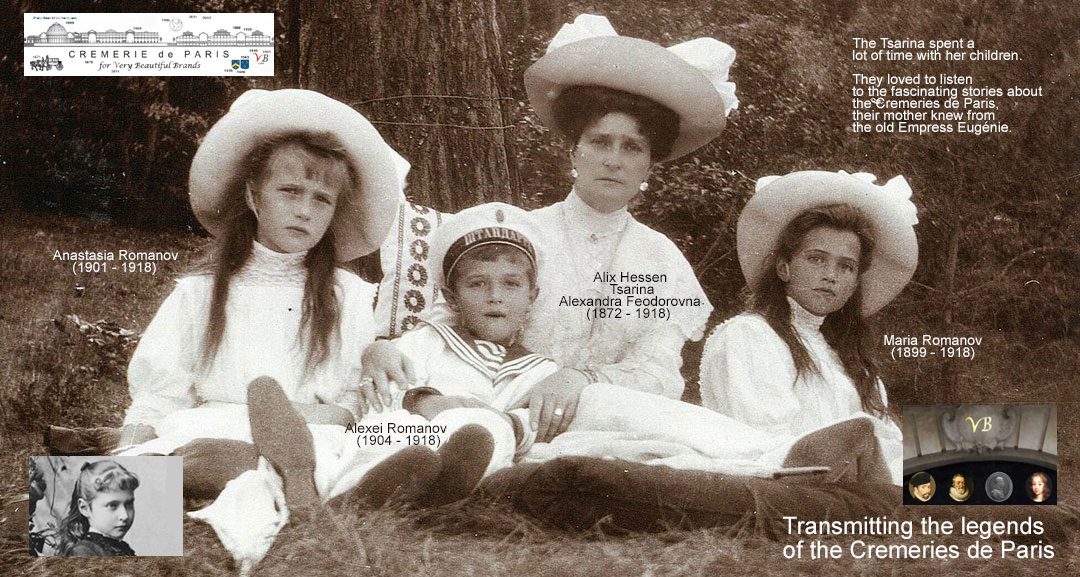
A granddaughter of Queen Victoria, she heard Empress Eugénie's stories about the cedar of Meudon as a child and, as Alexandra Feodorovna, passed them to her five children.
From exile in England to the court of the Tsars
The fall of the Second Empire in 1870 sent Eugénie into exile in the United Kingdom. What remained to her was memory — and Victoria's England to listen.
It was there, around 1880, that Alix of Hesse (1872-1918), a granddaughter of the Queen and then eight years old, was captivated by the former empress's stories — one of those childhood tales that are never forgotten.
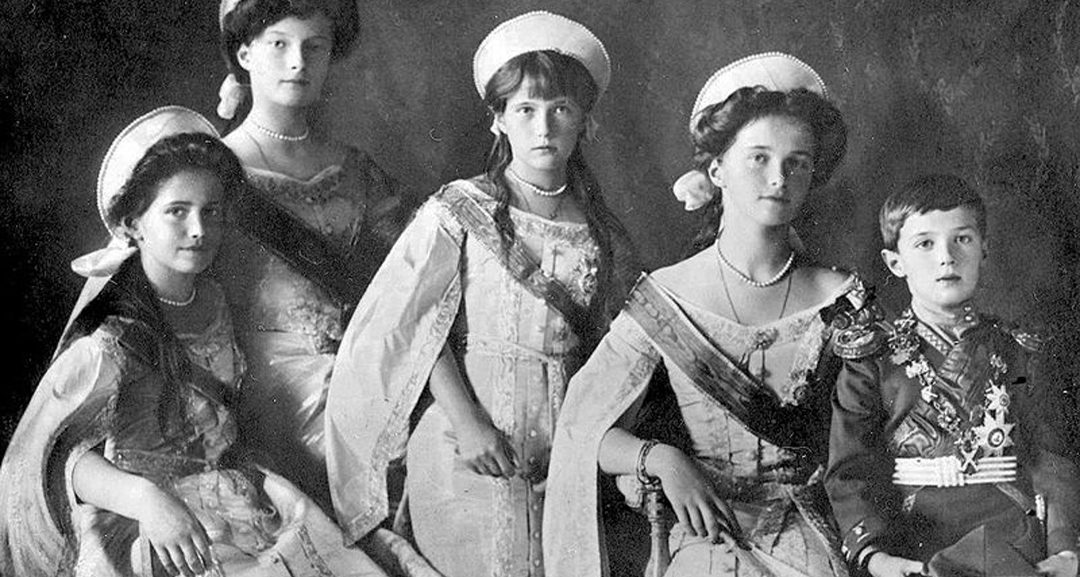
On 26 November 1894 Alix married Nicholas II and became Tsarina under the name Alexandra Feodorovna. She took the legend with her. To Olga, Tatiana, Maria, Anastasia and the Tsarevich Alexei she told the story of the French cedar that gives strength and long years, and according to the tradition passed down every one of them wanted to go and put their arms around it.
1853
Eugénie de Montijo marries Napoleon III.
1855
Eugénie brings Queen Victoria to the cedar; both women embrace it.
1865
Death of General Jacqueminot, who first showed Eugénie the tree.
1880
In exile in Britain, Eugénie passes the legend to Alix of Hesse.
1894
Alix marries Nicholas II and tells the story to her five children.
1920s
Kirill and Boris Romanov, refugees in France, come to Meudon.
"The tree never left Meudon. Its legend went as far as Saint Petersburg — and came back with those who were fleeing."
Association pour le Cèdre — ARCBMAnastasia, Vladimir Paley and the last pilgrims
In the 1910s the legend found a messenger. Vladimir Paley (1887-1918), a cousin of the Romanov children, lived at Boulogne-sur-Seine, minutes from the plateau of Meudon. The story goes that the young Anastasia would ask him to go and see the tree on her behalf and report back. She never saw the cedar herself; she knew it by proxy all the same.
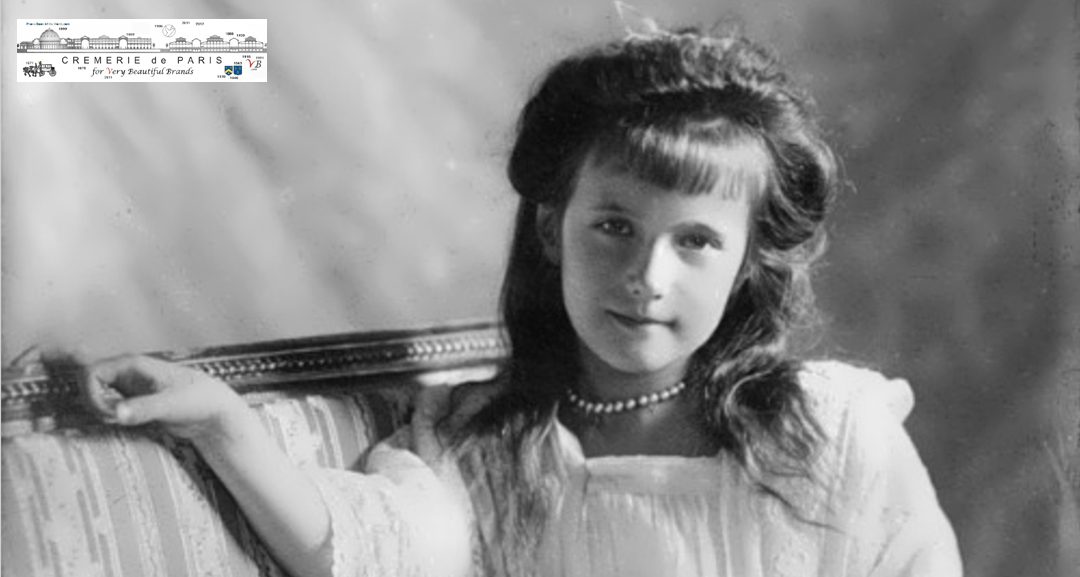
On 16 July 1918 the Tsar's children were executed. The legend did not die with them: it had already been entrusted to the children of the family's close circle, many of whom fled the revolution and carried it abroad.
Several came back to the foot of the tree. In the 1920s Grand Duke Kirill Romanov (1876-1938) and his wife Victoria Melita (1876-1936) — another granddaughter of Queen Victoria — visited it during their stays in Meudon. His brother Boris Romanov (1877-1943) bought a property in the town called "Château Sans-Souci", on the route des Gardes, since demolished. Two generations after Eugénie, the cedar had become a meeting place for a dynasty without an empire.
This living heritage deserves protecting
Join the people working to save the Imperial Cedar.
To go further
Films and documentaries that set the scene for this chapter. They are not about the tree itself.
Napoleon III and France in full bloom (in French)
52:04 · Adyl Abdelhafidi
The life of Empress Eugénie, told by Jean des Cars (in French)
20:31 · Jean des Cars
Victoria & Albert, a royal love story
13:50 · Lindsay Holiday
Anastasia Nikolaevna Romanov
Anastasia’s music box, from the 1997 animated film
The Christmas Broadcast, 1957
The Royal Family